



It works the way your team does.
Text your Associate, email it, send it files. It answers with the record behind it and does the work when you say so.
Ask it anything. Over text.
Text your Associate a question about the case. It answers with the documents behind it, then does the next piece of work when you say so.
- ATL-004417 · Morrison to Hayes: “Let’s take pricing to text.”
- ATL-011203 · IT ticket enrolling Hayes’s personal phone for work.
- Hayes Dep. 64:12 · admits texting the CFO about Q3 pricing.
Works in your inbox.
Email your Associate the way you’d email a colleague: send it files, assign it work, and it brings back what needs your call.
The redline is ready. Two custodians still need follow-up, and I left one question in the document.
WMotion to compel — redline.docx48 KBKeep Section 20A. Narrow the request to the Atlas custodians. Custodian list attached.
XCustodians.xlsx16 KBRevised. Section 20A stays in, and the request is limited to the Atlas custodians.
WMotion to compel — revised.docx51 KBYour Associate doesn’t need a prompt.
It’s staffed on your matter.
Your Associate works from everything that informs your case theory: your docket, your email, your documents, your depositions. It knows what’s next because it knows the case. You make the calls; it carries out the work.
Announced September 25, 2026 · Read the press release →Your Associate knows your case.
Your docket, your email, and a growing list of connections feed the matter, so your Associate starts where the case actually is.
- Filings and emails on your matter, as they arrive
- Responses proposed for your team to confirm
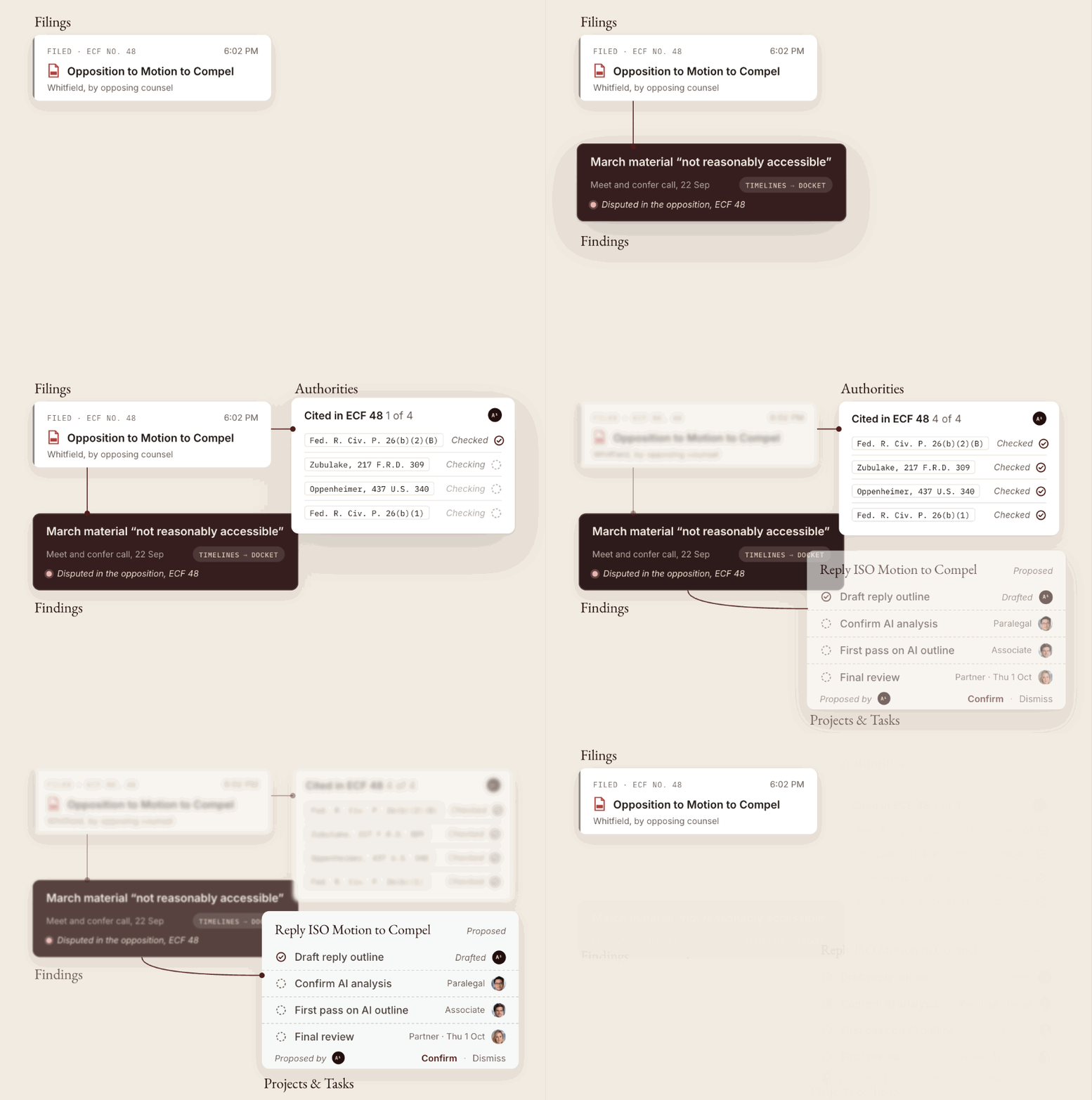
Your Associate keeps your record current.
Findings from your documents and depositions stay up to date, so you can see where the gaps and weak points are.
- Conflicting information, flagged
- Counsel, parties and your cast of characters, compiled
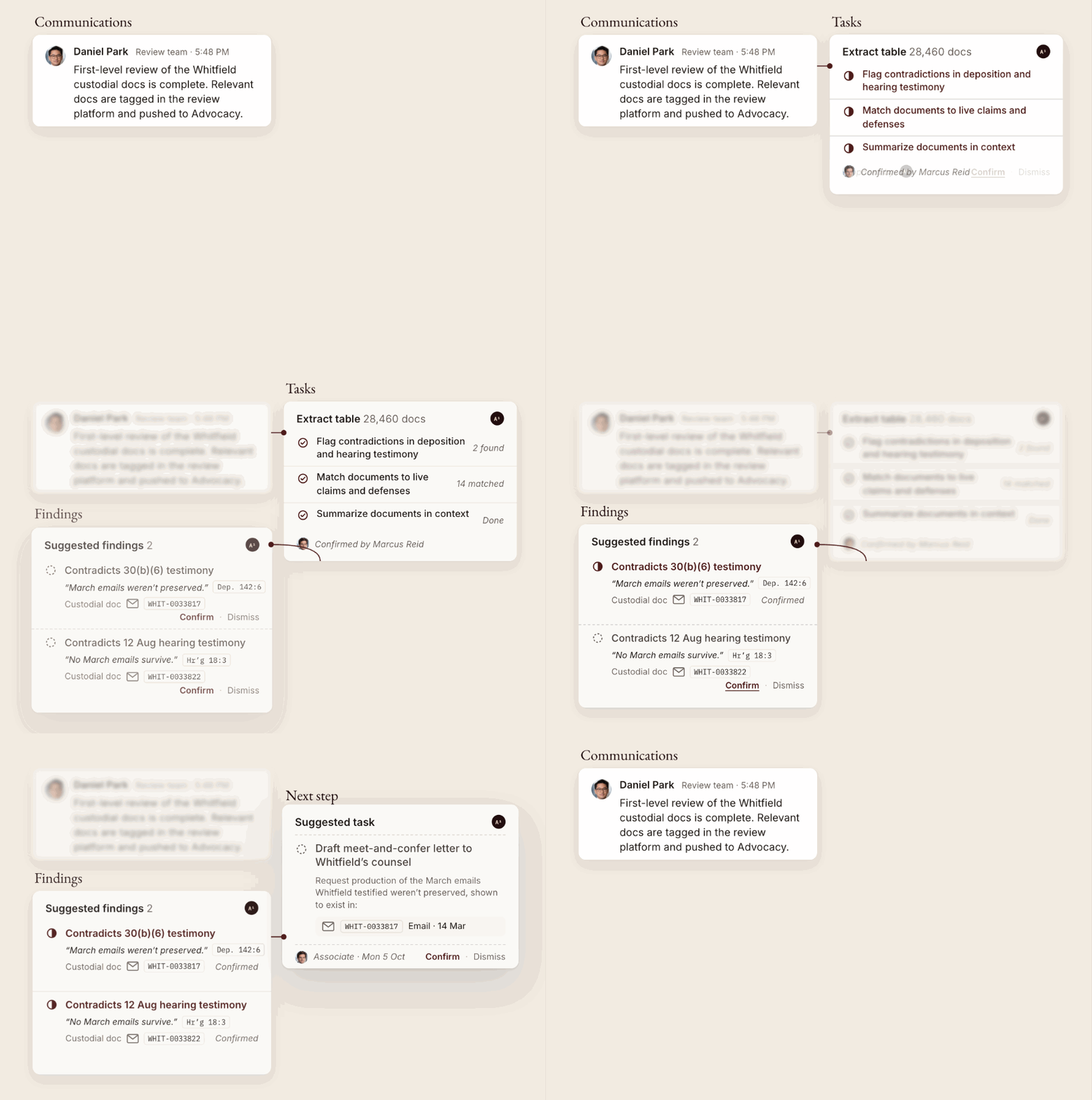
Your Associate proposes the next step.
Your team approves the plan.
The plan and the tasks come to you; a person reviews every step. Draft together in a native .docx editor.
- Every step reviewed by a person
- A full first pass, or just the outline

The work is yours.
The judgment stays.
Every draft, decision, and review becomes part of your team’s record. It stays with you after your Associate’s work is done.
- Every step traced to the person who approved it
- Your record, connected across the whole matter

Put your Associate to work.
Your Associate works where you already do. Text it or email it: send it files, assign it work, and it brings back what needs your call.
Methods: your playbooks
Set how your firm does the work, once. Methods tell your Associates how to draft, what to check, and which steps need a person’s sign-off, and they set who on your team can assign what. Every Associate follows them on every matter.
Drafting and revision
Draft and revise briefs, motions, discovery responses, and deposition outlines.
Docket
Track filings and flag dates, changes, and questions that need attention.
Opposing counsel’s citations
Check whether the cited authorities support the propositions claimed.
Text and email
Text or email your Associate to send it files and assign it work. It drafts replies and matter updates from the same case context.
Matter channels
Every matter and project gets its own channel, like a team chat for the case. Your team and your Associate talk, share files, and hand off work in one place.
Calendar
Keep hearings, meetings, and follow-ups tied to the matter’s deadlines.
Projects and tasks
Break projects into tasks with owners, priorities, deadlines, and review steps.
Team coordination
Coordinate handoffs, surface blockers, and keep open work in view.
Call your Associate.
Work by voice over the phone. Get work done while you’re on the move.
Staff as your needs evolve.
Staff one Associate or several. Add Associates for the motion, keep them for the case, and release them when the matter closes.
Your rules.
Your oversight.
Single tenant. Your data is never used to train AI models. Every thread auditable, and yours. Your playbooks, permissions, and review history.